
Culture & Heritage
Keeping Our Culture Alive
Behabtu Woldesenbet • 9/14/2026
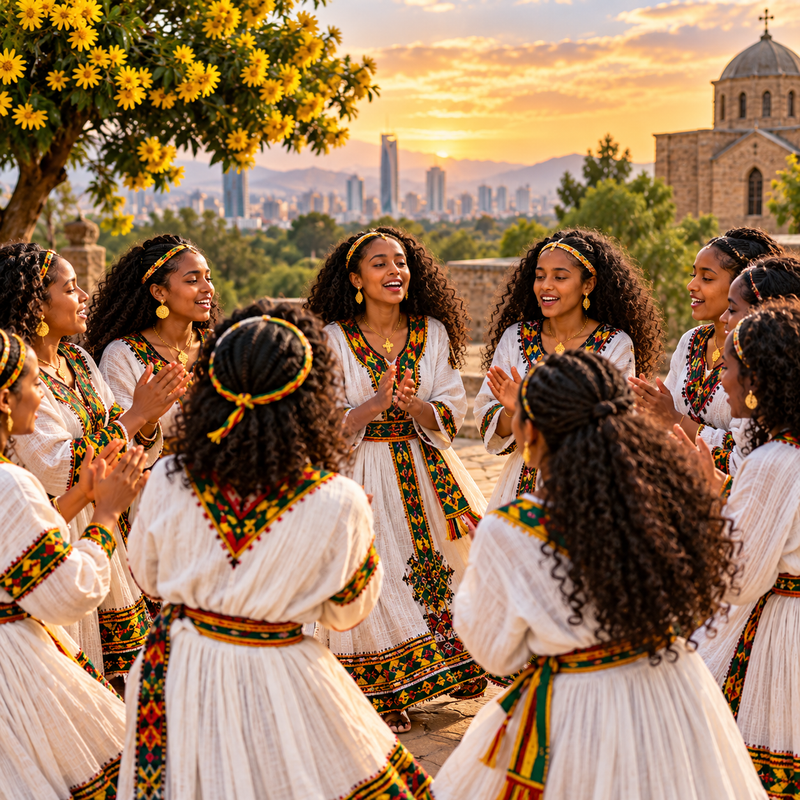
Preserving our culture starts with passing it on. This article explores how families, churches, mosques, civic organizations, and communities can help the next generation stay connected to their language, heritage, and identity while strengthening the bond between Africa and the diaspora.
Keeping Our Culture Alive: Connecting Generations Across the Diaspora
There are moments that remind us why preserving our culture matters.
Watching children born and raised in the diaspora sing Ethiopian songs, speak Amharic, participate in cultural traditions, and proudly embrace their heritage is one of those moments.
For many of these children, Amharic is not their first language. Ethiopia may be a country they know mainly through their parents, grandparents, church, community gatherings, food, music, and stories.
Yet they are learning where they come from.
That does not happen by accident.
It happens because parents make the commitment to teach them. It happens because community institutions create a place where that learning can continue. And it happens because one generation decides that our language, culture, history, and values are worth passing to the next.
Gratitude to the Families and Institutions Doing the Work
I want to express my deepest appreciation to the Ethiopian Orthodox Church and to the families who devote their time, energy, and resources to teaching our children their language, culture, faith, and heritage.
To the Ethiopian Orthodox Church, thank you for recognizing that serving a community also means preparing the next generation to understand where they come from.
To the parents and families, your commitment deserves recognition.
You bring your children to programs and activities. You spend hours driving them back and forth. You practice with them at home. You encourage them when learning another language becomes difficult. You invest your time and resources because you understand that what you are giving them cannot easily be replaced later.
Every year, when I see these children singing, speaking Amharic, and embracing their culture, it brings me tremendous joy.
It also reminds me of something bigger.
Culture survives when it is transferred.
Our Second Generation Is the Bridge
For diaspora communities, preserving culture cannot mean asking our children to choose between being American and being Ethiopian, African, or connected to their family's heritage.
They can be both.
Our responsibility is to give them enough connection to their roots that they understand who they are and enough freedom to carry that identity forward in their own way.
This is especially important for our second generation.
They are not simply the children of today's diaspora. They are the future leaders of our communities.
They will become the professionals, entrepreneurs, parents, teachers, community organizers, clergy, nonprofit leaders, and civic leaders who determine whether our communities remain connected another generation from now.
If they are disconnected from our institutions today, we should not expect them to lead those institutions tomorrow.
This Responsibility Belongs to All of Us
Churches have an important role, but preserving culture cannot belong to churches alone.
Our mosques, civic associations, cultural organizations, nonprofits, businesses, schools, community groups, professionals, parents, and individuals all have a role.
A church may teach language and tradition.
A mosque may give young people faith, identity, belonging, and community.
A civic organization may teach service and responsibility.
A cultural organization may preserve music, history, art, and traditions.
Businesses and professionals can mentor young people and introduce them to entrepreneurship and careers.
Parents connect all of these pieces at home.
Together, these institutions create an ecosystem that allows culture to survive beyond one generation.
Where Ubuntify Fits Into This Mission
This is also closely connected to why we are building Ubuntify.
Technology can either contribute to the distance between generations or help us close that distance.
Ubuntify's mission is not simply to put African businesses and people into another online directory. We are building infrastructure for connection between people, businesses, professionals, organizations, communities, Africa, and the diaspora.
That must include our younger generations.
Imagine a young Ethiopian-American discovering a cultural event through Ubuntify. A student finding an Ethiopian professional in the career they hope to pursue. A parent discovering a language program for their child. A community organization reaching young people who otherwise would never know it existed. A church or mosque sharing an event beyond its existing congregation. A young entrepreneur connecting with a business owner who understands both their American experience and their African heritage.
These may look like small connections.
Collectively, they help keep a community connected.
That is the kind of network we want Ubuntify to help strengthen.
Preservation Requires Participation
We cannot preserve our culture by simply talking about how important it is.
We have to practice it. We have to teach it. We have to create spaces for it.
Most importantly, we have to invite the next generation into those spaces and give them a meaningful role in shaping what comes next.
Our children may speak differently from us. They may experience their Ethiopian or African identity differently from us. Their community may exist both physically and digitally. That is okay.
The goal should not be to make the next generation exactly like the previous generation.
The goal is to give them roots strong enough that they can grow without losing where they came from.
To every parent, church, mosque, civic organization, teacher, volunteer, and community member doing this work: thank you.
When our children know their history, understand their culture, remain connected to one another, and proudly carry that heritage forward, we are doing more than preserving the past.
We are preparing the next generation to carry it into the future.
Connect. Help. Uplift.